Commissioning work is more complex than ever. Teams are managing larger portfolios, more stakeholders, tighter timelines, deeper documentation requirements, and increasingly sophisticated building and energy systems. At the same time, expectations for speed, standardization, visibility, and collaboration continue to rise.
Bluerithm 2.0 was built for this new reality.
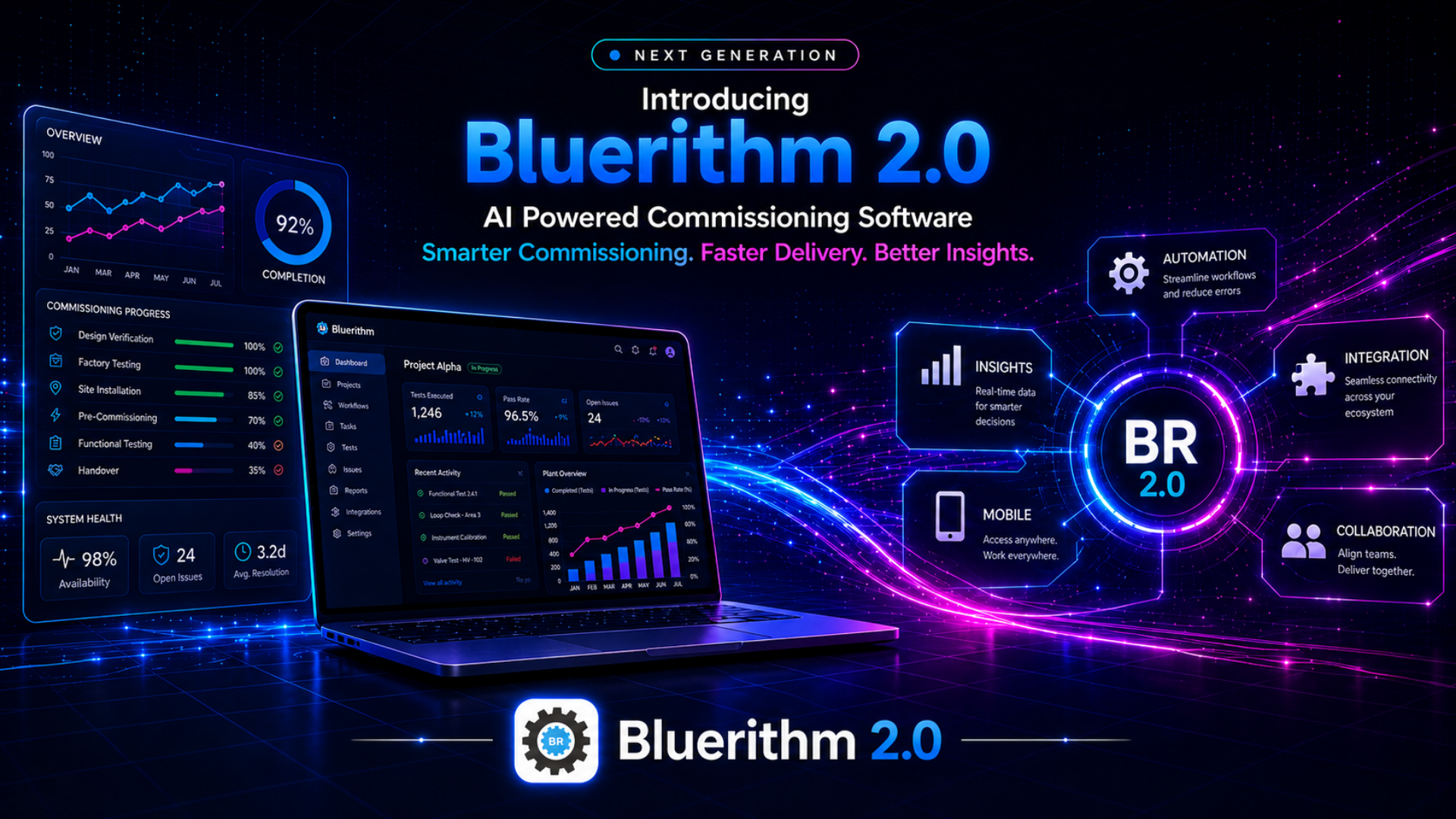
This release represents the next generation of Bluerithm: a faster, more flexible, more intelligent commissioning platform designed to help teams standardize project delivery, improve visibility, reduce administrative work, and keep projects moving from design through closeout.
See the Big Picture and the Details
Bluerithm 2.0 introduces powerful Portfolio Dashboards and Project Dashboards that give teams better visibility across their work.
Portfolio Dashboards help leaders understand performance across multiple projects, identify trends, monitor progress, and stay ahead of risks. Project Dashboards give project teams a real-time view of the work happening inside each project, including equipment, checklists, forms, issues, progress, and closeout status.
Whether you need a high-level executive view or detailed project-level insight, Bluerithm 2.0 makes it easier to see where things stand and what needs attention.
A More Flexible Project and Workflow Structure
Every commissioning team has its own process. Every project has its own requirements. Bluerithm 2.0 gives teams the flexibility to organize projects and workflows in the way that best fits their work.
With a flexible project structure, teams can organize equipment, systems, checklists, test forms, design reviews, site visit records, issue workflows, and other project activities in a way that reflects the real structure of the project. This makes Bluerithm adaptable across building commissioning, energy projects, industrial facilities, infrastructure, and other complex project types.
Faster Project Setup Through Templates
One of the biggest opportunities to improve commissioning efficiency is at the very beginning of a project.
Bluerithm 2.0 makes project setup faster and more standardized through powerful template capabilities. Teams can use repeatable project templates, equipment types, checklists, test forms, workflows, issue settings, and report structures to create consistency from one project to the next.
Instead of starting from scratch, teams can build from proven standards, then adapt the project to its specific scope and requirements. This helps reduce setup time, improve quality, and ensure that every project follows the right process from day one.
Native AI Tools Built for Commissioning
Bluerithm 2.0 brings AI directly into the commissioning workflow with native tools designed to reduce repetitive work and help teams move faster.
The AI Powered Checklist and Form Generator helps teams create commissioning checklists and test forms more efficiently. Instead of manually building every form from scratch, users can generate structured content that can be reviewed, refined, and applied to the project.
The new AI User Import capability simplifies user onboarding by helping teams import and organize users more efficiently.
These tools are designed to support commissioning professionals, not replace their expertise. The goal is simple: reduce administrative effort so teams can spend more time reviewing, validating, coordinating, and delivering high-quality work.
Built for Agentic AI Workflows
Bluerithm 2.0 is also designed for the future of software interaction.
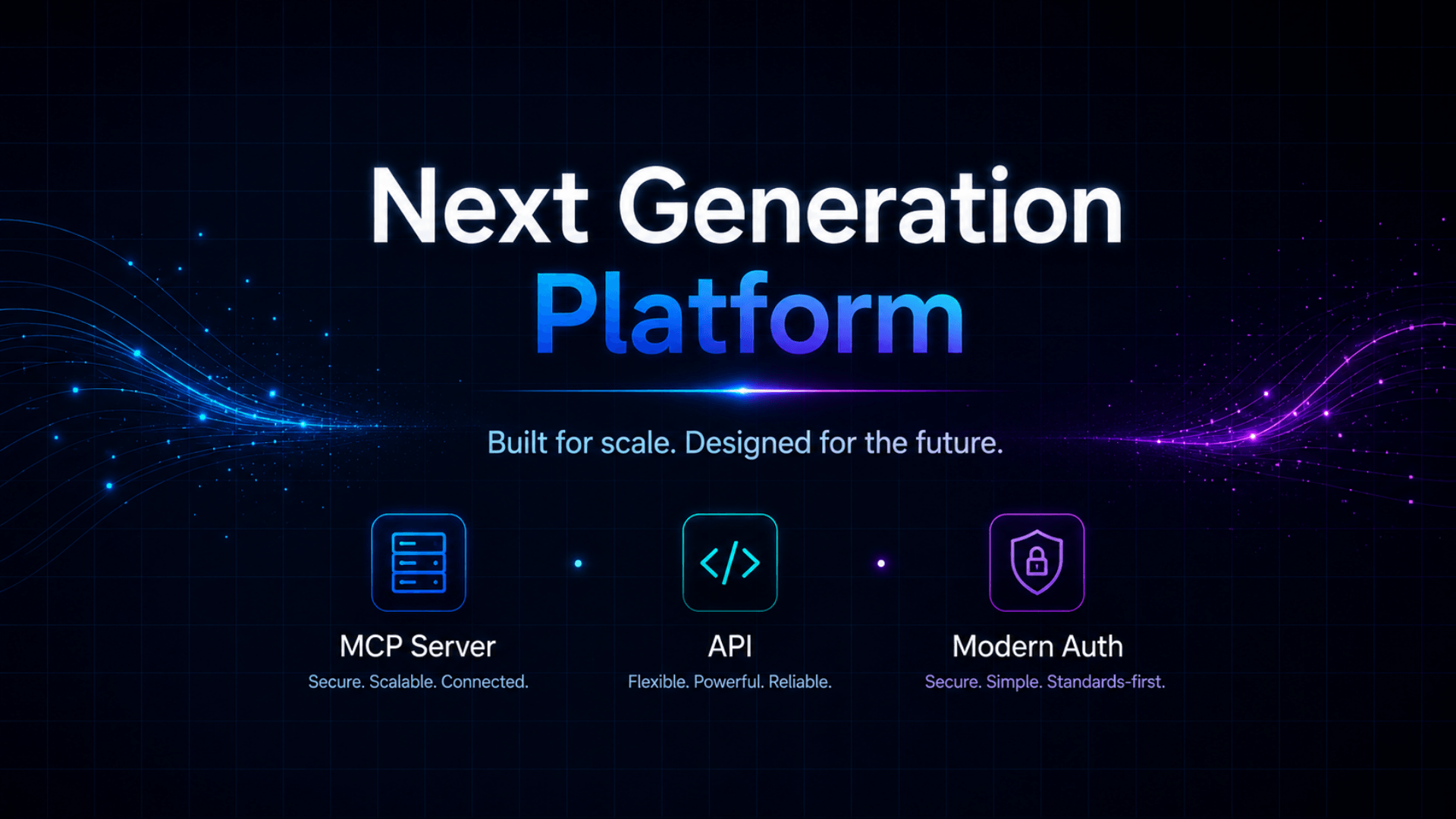
With a next-generation platform architecture that includes an MCP Server and modern API with full read/write capabilities, and support for agentic AI tools, Bluerithm can integrate with AI assistants that help execute complex workflows across systems.
One example is Claude Cowork, where an AI agent can help review project documents, set up project structure, reference templates, create equipment, generate checklists and forms, configure issue settings, and support project setup activities through Bluerithm’s backend services.
This opens the door to a new way of working: teams can delegate structured, repeatable workflows to AI agents while still keeping humans in control for review, validation, and decision-making.
Enterprise-Ready Security and Authentication
Bluerithm 2.0 is built on a modern platform foundation with enterprise-ready authentication and access capabilities, including:
- Single Sign-On
- Multi-Factor Authentication
- OAuth 2.0
These capabilities make Bluerithm 2.0 better suited for organizations that need secure, scalable, integrated systems that fit into their broader technology environment.
Better Reporting
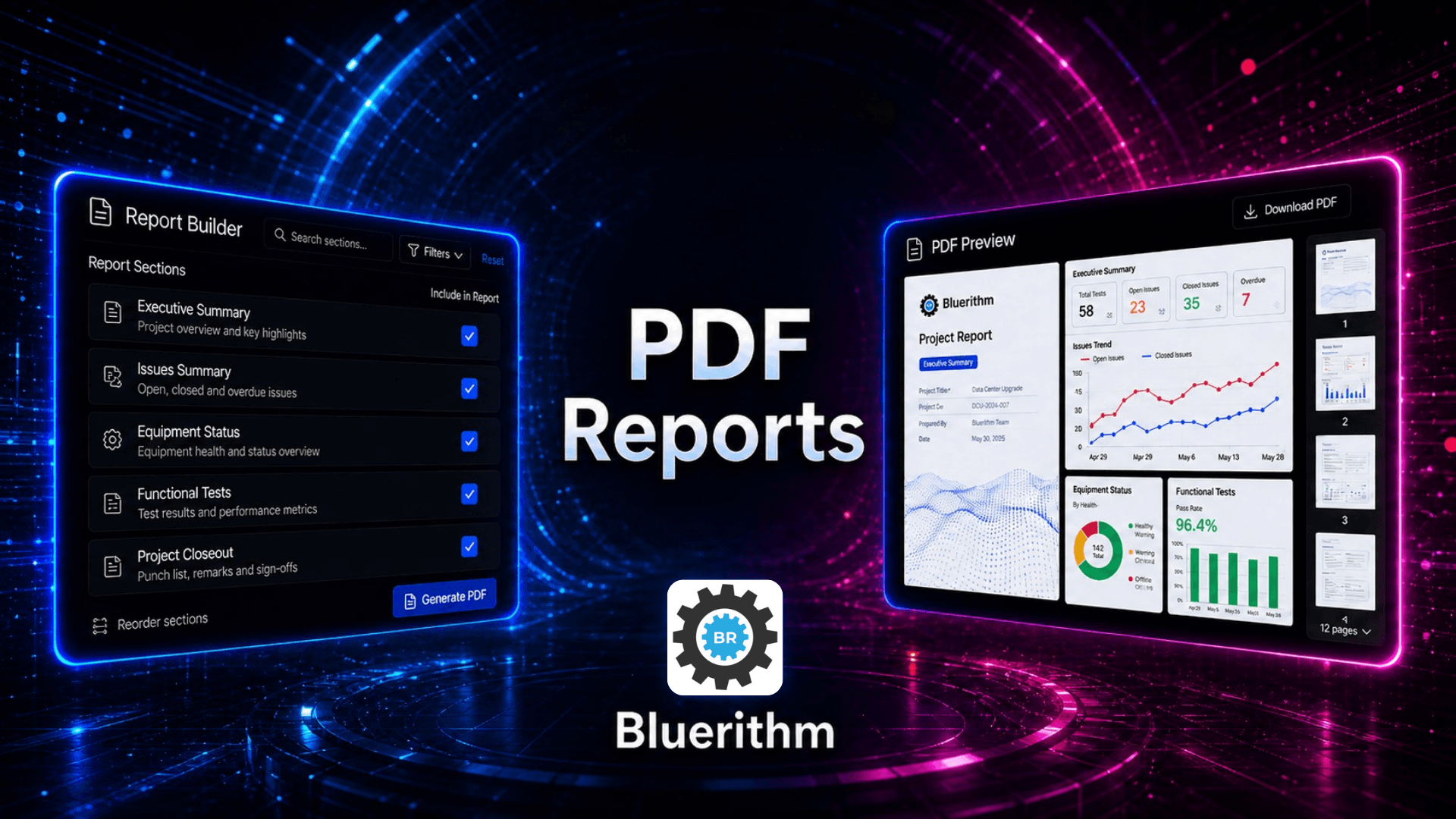
Reports are one of the most important deliverables in commissioning. Bluerithm 2.0 includes a Report Builder that helps teams create clearer, more consistent, and more useful reports.
Teams can generate PDF reports based on the information already being tracked in Bluerithm, including project data, equipment, checklists, forms, issues, progress, and supporting documentation. This helps reduce manual report creation and makes it easier to maintain consistency across projects.
Stronger Issue Management
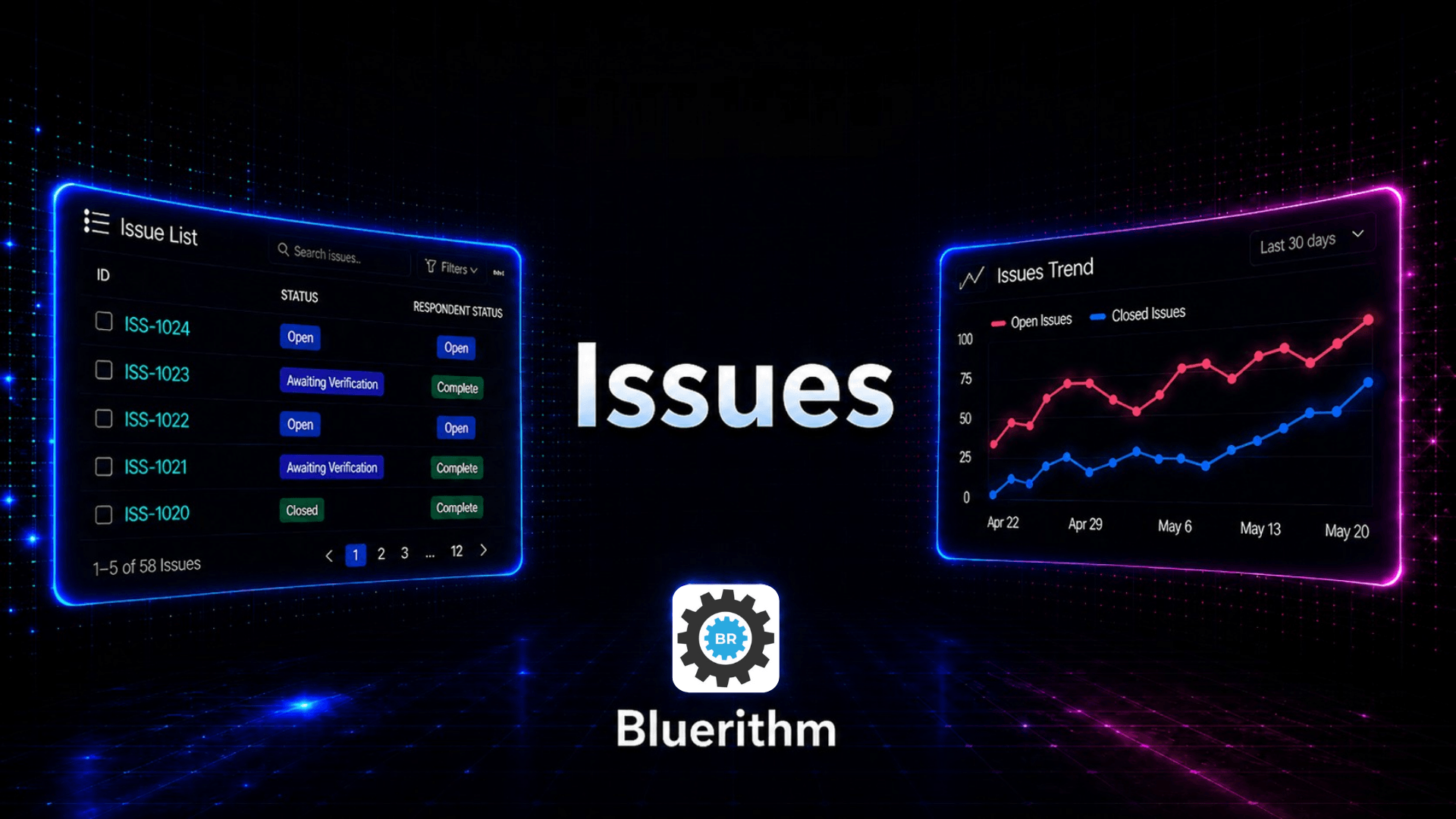
Issue tracking is central to commissioning success. Bluerithm 2.0 includes enhanced Issue Management capabilities to help teams identify, assign, track, and resolve issues more efficiently.
Teams can manage issue categories, priorities, custom properties, responsibilities, status, and documentation in one place. This helps keep stakeholders aligned and gives project teams a clearer path from issue discovery to resolution.
Issue Pins and PDF Markups
Bluerithm 2.0 also introduces Issue Pins and PDF Markups, making it easier to connect issues directly to drawings, floor plans, and project documents.
Instead of describing an issue only in text, teams can mark up PDFs, place pins, and visually identify where issues occur. This improves communication between commissioning providers, contractors, owners, engineers, and field teams, especially when location and context matter.
A Unified App Experience
Bluerithm 2.0 brings the platform together into a more unified app experience across desktop and mobile workflows.
Whether users are setting up projects, completing forms, managing issues, reviewing dashboards, generating reports, or working in the field, the experience is designed to feel more connected and consistent.
Bluerithm 2.0 also includes both Light Mode and Dark Mode, so users can choose the interface that works best for their environment and preferences.
Work Anywhere: Mobile Online and Offline
Commissioning work happens in the field, in mechanical rooms, on rooftops, in plants, at job trailers, and everywhere in between. Reliable connectivity is not always guaranteed.
Bluerithm 2.0 supports mobile online and mobile offline workflows so field teams can keep working even when internet access is limited. Users can continue completing work in the field and sync when they are back online, helping projects stay productive regardless of site conditions.
Localization and Language Support
Commissioning teams often work across regions, countries, and languages. Bluerithm 2.0 includes localization and language support for nine languages, making the platform more accessible for global teams and international project stakeholders.
This helps organizations standardize their commissioning process while supporting the language needs of distributed teams.
Built for the Future of Commissioning
Bluerithm 2.0 is more than a visual update or a list of new features. It is a major step forward in how commissioning software can support modern project delivery.
It brings together portfolio visibility, flexible workflows, standardized templates, AI-assisted setup, agentic AI integrations, stronger reporting, improved issue management, mobile field execution, modern security, localization, and a unified app experience.
For commissioning teams, the result is a platform that helps them work faster, collaborate more effectively, reduce repetitive tasks, improve consistency, and deliver better project outcomes.
Bluerithm 2.0 marks a new era for commissioning software, and we’re excited to put it in the hands of the teams shaping the built environment, energy systems, and infrastructure of the future.